My First Hackathon Experience: Building a Virtual Herbal Garden
Every developer remembers their first hackathon — the excitement, the chaos, and the learning that comes with it.
For me, that moment came in February 2025 when I participated in my very first 24-hour hackathon at Terna College of Engineering, Navi Mumbai.
The Beginning of Something New
When I first heard about the hackathon, I wasn’t sure what to expect. I had seen people talk about hackathons online — how they build projects in just a day — but I had never been part of one myself.
Still, I decided to step out of my comfort zone and participate. I gathered a small team, and together we started looking through the list of problem statements.
After a bit of discussion, one topic immediately caught our attention:
“Virtual Herbal Garden.”
It sounded unique — a project that combined technology with nature, something that could help people learn about herbal plants in a modern, interactive way. We decided to go all in.
Brainstorming the Idea
Our goal was simple:
To create a virtual space where users could learn about herbal plants and see them in 3D, almost like having a small herbal garden in their phone.
We started sketching out our plan:
- A website that lists different herbal plants with information about their uses.
- A 3D viewer to visualize each plant model interactively.
- And the ability to use a phone camera to view the plant virtually in real space.
The idea was ambitious, especially for a 24-hour event, but we were excited to try.
The 24-Hour Sprint
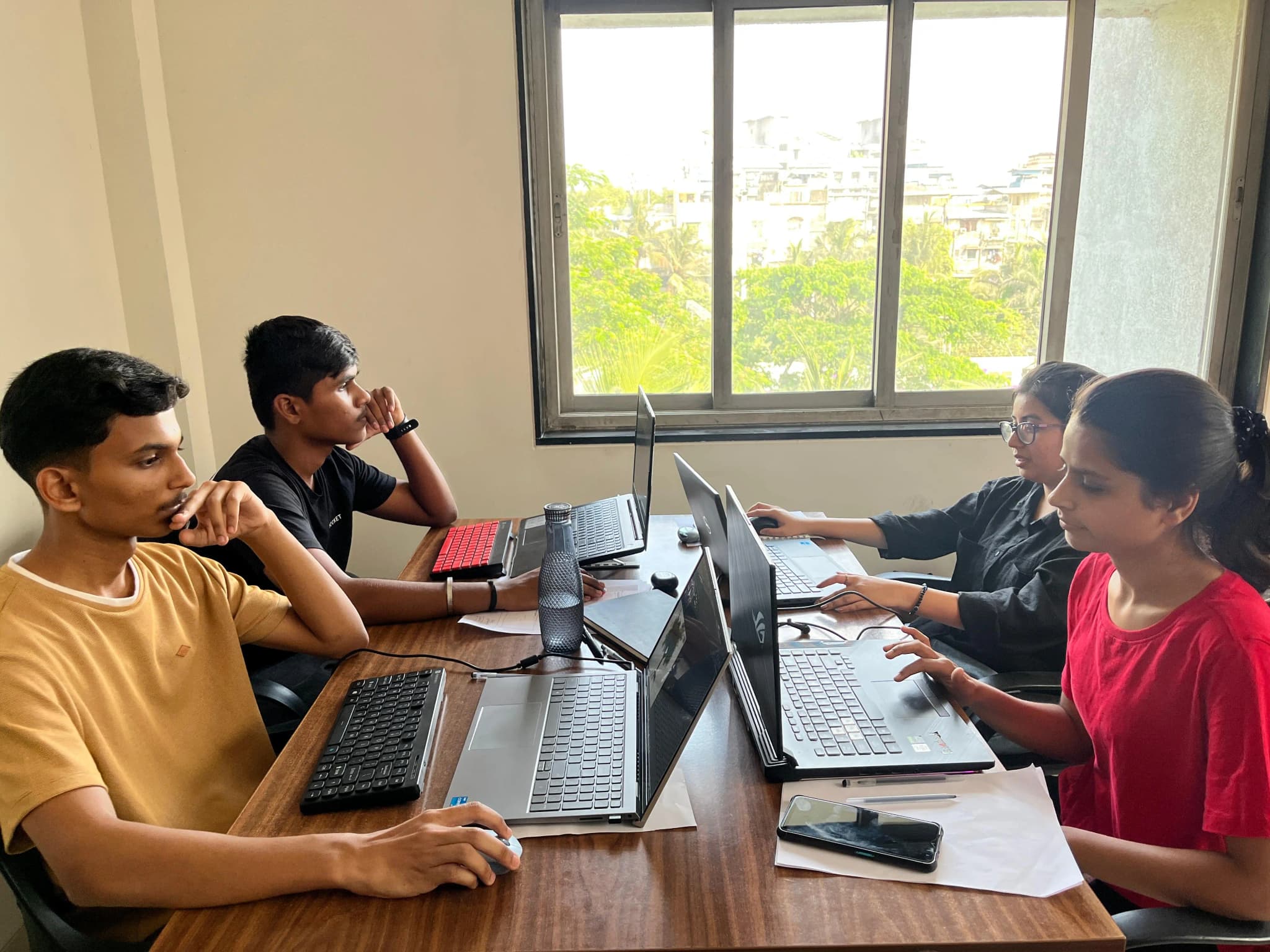
Once the hackathon started, the energy in the room was electric. Everyone was coding, designing, or debugging something.
We divided the work:
- I focused on building the frontend using HTML, CSS, and JavaScript.
- Another teammate worked on collecting plant data and writing descriptions.
- And another handled the 3D model integration using the
<model-viewer>library — a web component that allows you to easily embed and interact with 3D models directly in the browser.
Seeing our first 3D herbal plant appear on the website felt magical — it was the moment we knew our idea could actually work.
Of course, it wasn’t smooth all the way.
We faced issues like:
- Models not rendering properly on mobile devices.
- Slow loading times for 3D assets.
- And the biggest challenge — staying awake and focused for 24 hours!
But every time something broke, we fixed it, learned something new, and kept going. The teamwork, the pressure, and the late-night debugging sessions all added to the thrill.
The Final Presentation
By the end of the 24 hours, we had a working prototype — a simple website that showcased different herbal plants, allowed users to rotate and zoom 3D models, and even view them through their phone camera in augmented reality mode (thanks to the <model-viewer>).
When we presented it to the judges, it felt incredible to demonstrate something we had built from scratch in just one day.
The best part wasn’t just completing the project — it was realizing how much we could achieve when we worked as a team under time pressure.
What I Learned
That hackathon taught me more than any regular coding session could:
- How to collaborate effectively under tight deadlines.
- How to plan and prioritize features in limited time.
- The importance of exploring new tools quickly and adapting fast.
- And most importantly — that building something functional is better than chasing perfection.
It was a huge boost to my confidence as a beginner developer.
Conclusion
Participating in my first hackathon was one of the most rewarding experiences of my journey so far.
I entered unsure and nervous but left inspired, confident, and excited to build more.
If you’ve never been to a hackathon before, my advice is simple:
Just go for it.
You’ll learn more in 24 hours than you might in weeks of tutorials — and you’ll walk away with memories, new friends, and a stronger belief in what you can create. 🚀